How Often Should You Test Indoor Air Quality in a Commercial Building?
"How often should we test our air quality?" is one of the most common questions we are asked, and the honest answer is that there is no single legally mandated interval for general indoor air quality (IAQ) the way there is for, say, LEV testing. What there is instead is a sensible, risk-based rhythm that most well-run buildings settle into. This article sets out how to think about IAQ testing frequency in a commercial setting, and the events that should always prompt a fresh look regardless of the calendar.

Start with a baseline, then set the rhythm
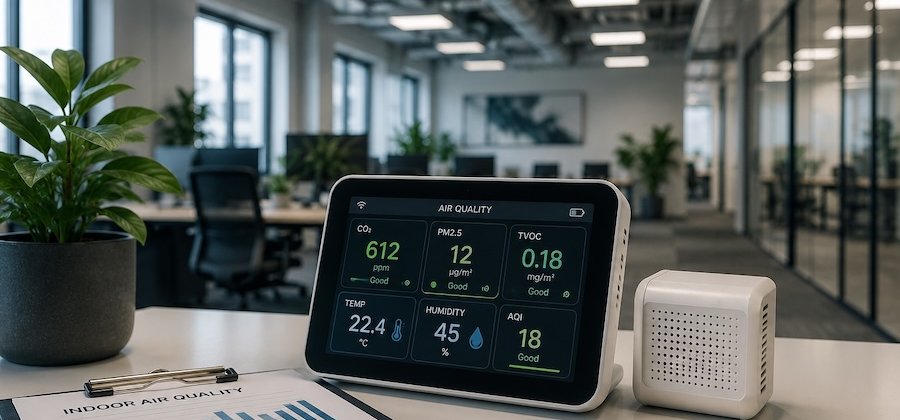
Before frequency means anything, you need a baseline. An initial IAQ assessment across representative areas of the building establishes where you stand on the parameters that matter, including CO2, which can be useful as an indicator of ventilation performance in occupied spaces, particulates, humidity, temperature and, where relevant, volatile organic compounds. A single spot reading provides information about conditions at that time, but a broader baseline or longer-term monitoring can give a more representative picture of how conditions vary with occupancy, season and building operation.
For a typical office, school or commercial premises with no specific process risks, the frequency of IAQ assessment should reflect building use, occupancy, ventilation arrangements, previous findings and any known concerns. Some organisations choose to include an IAQ review within their annual building-management programme, but this should be treated as a practical management decision rather than a universal compliance requirement. Buildings with higher occupancy density, mechanical ventilation serving many people, or vulnerable occupants may justify more frequent monitoring, and some organisations choose continuous CO2 monitoring in key spaces to keep an eye on ventilation between formal assessments.
Certain environments warrant tighter intervals again, including healthcare and care settings, laboratories, spaces with specific contaminant sources, and buildings where occupants have raised concerns. In these cases the risk assessment, rather than the calendar, should drive how often you test and what you test for.
Events that should always trigger a test
Frequency is only half the picture, because certain events should prompt an assessment whatever your schedule says. Changes to the ventilation system, such as new plant, rebalancing or altered controls, are an obvious trigger, as are a change of use, a significant increase in occupancy, and refurbishment or building work that introduces dust, fumes or new materials. Most importantly, occupant complaints such as stuffiness, unusual odours or recurring discomfort can provide an important indication that conditions have changed and should prompt investigation.
How we can help
The right testing frequency is ultimately a judgement about risk, and it is one we help clients make every day. Vectair Environmental provides commercial indoor air quality assessments and can help you establish a sensible baseline, develop an appropriate monitoring strategy that fits your building, and respond quickly when something changes.
We have supported UK organisations with environmental compliance since 1993, across healthcare, education, commercial and public-sector settings. To discuss an IAQ assessment or a monitoring schedule for your premises, contact our team on 0118 981 7437 or at


